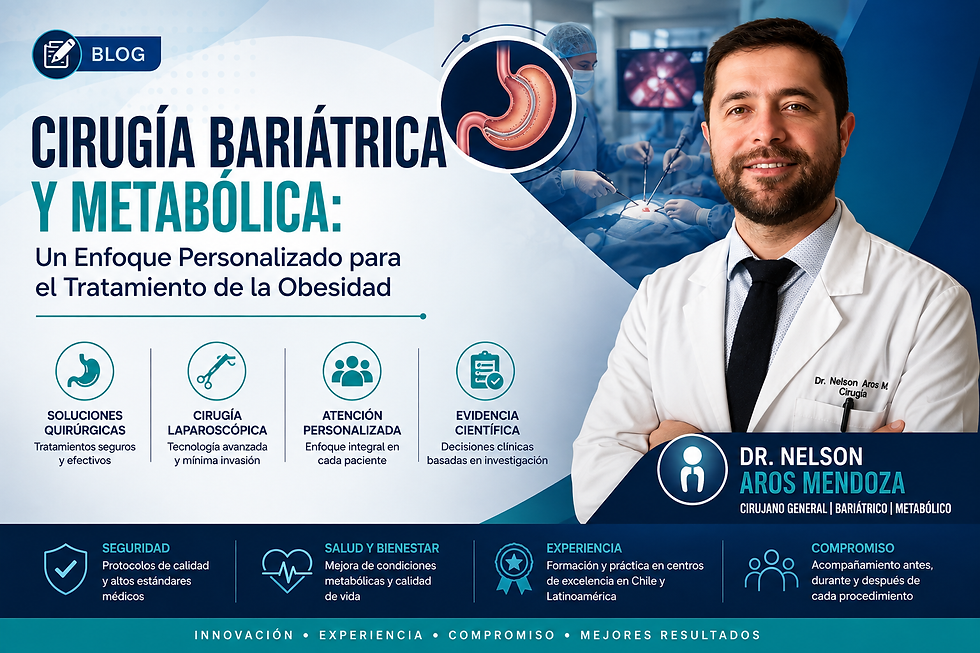
Dr. Nelson Aros Mendoza explica cómo trabaja su equipo multidisciplinario en cirugía bariátrica
- drnelsonaros
- Sep 30, 2025
- 2 min read

A Comprehensive Approach to Treating Obesity
Bariatric surgery has become one of the most effective treatments for severe obesity, but its success depends on more than just a surgical procedure. According to Dr. Nelson Aros Mendoza, an experienced specialist in bariatric and metabolic surgery, the cornerstone of successful outcomes lies in the work of a multidisciplinary team. This coordinated approach ensures that patients receive complete care before, during, and after surgery, addressing not only their weight but also their overall health.
Why a Multidisciplinary Team is Essential
Dr. Aros Mendoza emphasizes that obesity is a chronic and complex disease influenced by many factors, including lifestyle, genetics, and psychological aspects. Surgery alone cannot guarantee long-term results without the support of specialists from various fields. His team includes surgeons, nutritionists, psychologists, endocrinologists, and physical activity experts who work together to provide personalized care tailored to each patient’s needs.
The Preoperative Stage
The patient’s journey begins with a detailed evaluation before surgery.
Nutritional preparation: The nutritionist educates patients on new eating habits, ensuring they are prepared for dietary changes required after surgery.
Psychological support: Emotional health is crucial. Psychologists help patients identify and manage behaviors such as anxiety or emotional eating, which may interfere with recovery.
Endocrinology evaluation: Many patients live with type 2 diabetes, thyroid conditions, or hormonal imbalances. Endocrinologists stabilize these issues, reducing risks during surgery.
This stage ensures that the patient is medically and emotionally ready, creating a safer surgical environment and increasing the chances of long-term success.
Post-Surgery and Lifestyle Support
The role of the multidisciplinary team extends far beyond the operating room.
Exercise guidance: Physical activity experts help patients incorporate tailored exercise plans to promote fat loss, maintain muscle mass, and improve cardiovascular health.
Nutritional monitoring: Ongoing dietary support ensures patients maintain balanced nutrition and avoid deficiencies after surgery.
Continuous psychological care: Emotional support continues to be essential, helping patients adapt to new lifestyles and maintain motivation.
Long-Term Follow-Up
Dr. Nelson Aros Mendoza explains that bariatric surgery should never be seen as a quick fix but as part of a lifelong process. Regular consultations allow the team to track progress, address potential complications, and reinforce positive habits. This constant guidance transforms surgery into a powerful tool for sustainable health improvement rather than a temporary solution.
The Patient’s Commitment
While the team provides medical expertise and ongoing support, Dr. Aros Mendoza highlights that long-term success also depends on patient commitment. When patients feel supported and guided by a multidisciplinary group, they are more motivated to embrace new habits and enjoy meaningful results.
Conclusion
For Dr. Nelson Aros Mendoza, bariatric surgery is not just a surgical technique but a comprehensive medical process. By working with a multidisciplinary team, patients are supported at every stage of their journey, achieving not only weight loss but also a healthier, more fulfilling life.


Comments